Unlearn and Relearn
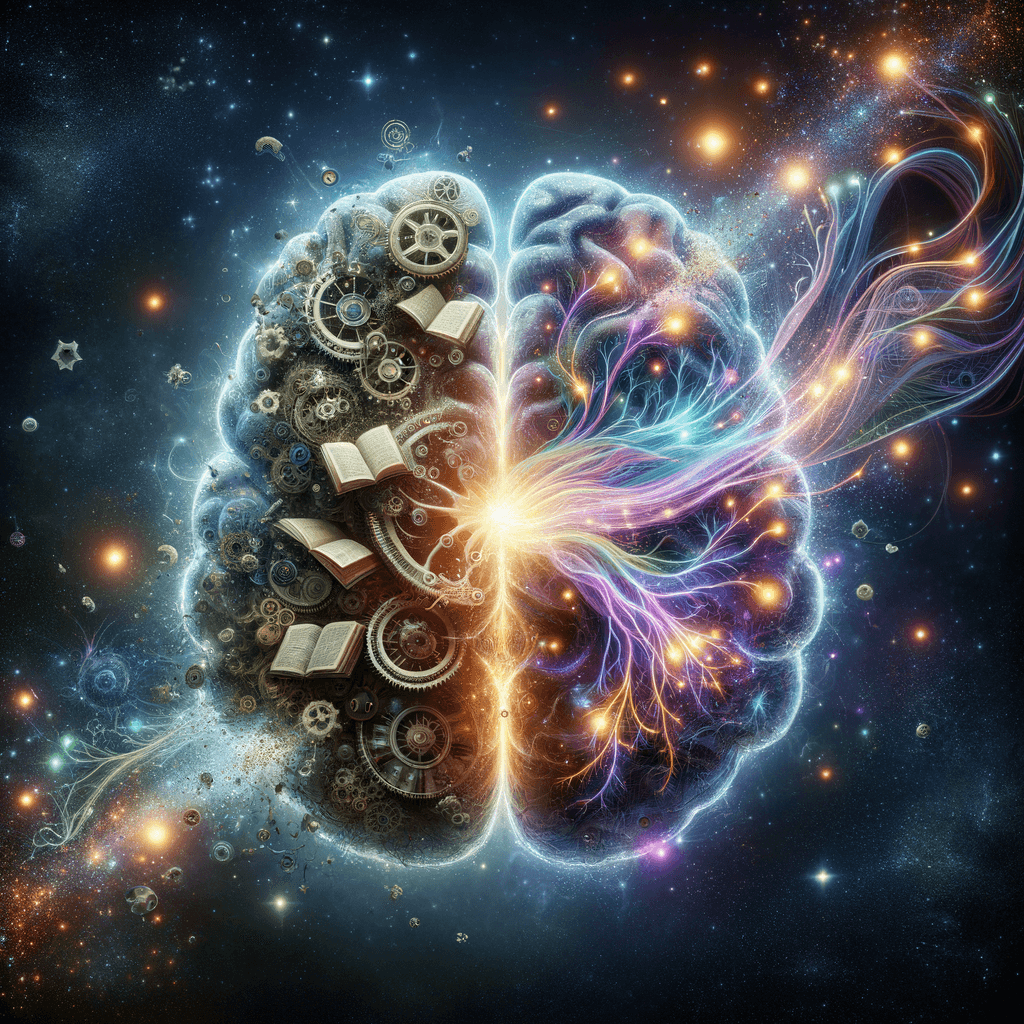
To unlearn means to redefine what we think we know about learning. Only then can we truly relearn.
Everyone learns, but not everyone knows how to learn
There is a theory about why "smart" kids often stumble academically later in life. Early on, they grasp concepts quickly, coasting on raw intellect. But eventually, the challenges outpace their innate abilities. Advanced mathematics, for instance, requires more than just being clever—it demands focused attention, rigorous note-taking, and relentless perseverance. When the safety net of natural talent vanishes, these students hit a wall. They never actually learned how to learn.
Everything spirals downwards quickly. The strategies that used to work suddenly fail, leaving them confused, criticized, and feeling inadequate. Before they can move forward, they must first unlearn.
Here is what I have come to understand: learning relies on two crucial pillars—absorbing information and making connections.
For me, absorbing information is the hardest part. The most conventional method—mandated by almost every teacher—is to simply sit down and listen.
You are forced to follow the presenter's pace, which has never worked well for me. If the speaker covers something I already know, I get bored, my attention drifts, and I rarely reconnect. Conversely, when the topic is entirely new, my brain scrambles to process it in real-time. I am forced to choose: disconnect from the lecture to chew on the new concept, or hastily save the information for later and try to keep up. I usually choose the former. (When I tried the latter, the information simply faded away.)
Making connections is what transforms raw data into usable knowledge. It is the ability to map abstract concepts onto real-world problems—the sudden, satisfying "Aha!" moment. From a biological perspective 1, this is when neurons forge new pathways, moving memory packets from fragile, short-term storage into secure, long-term memory.
This is why interactive teaching is so effective: it forces you to absorb information and make connections simultaneously.
Now that I have briefly explained the two processes involved in learning, let me connect them to the stories I want to tell.
The Gifts We Are Born With
Some people are blessed with an immense attention span. They can sit still, remain entirely focused, and absorb massive amounts of information into their short-term memory. Others—the "smart" ones—are naturally gifted at making rapid, intuitive connections. Most of us lean heavily toward one or the other. Those rare few gifted with both sail effortlessly through academics and, perhaps, through life.
Absorbing Information
My advice? Listen actively whenever possible. Take meticulous notes or record the session so you have raw material to work with later. In these moments, focus entirely on absorbing the information rather than trying to instantly connect the dots. However, our energy and attention are finite. When you are exhausted, try listening passively. Just being present at a lecture allows your subconscious mind to quietly gather fragments of information, which will help you build connections down the line.
Making Connections
Making connections takes time. It is a biological process, and when you feel stuck, brute force will not speed it up. As Matthew Walker suggests in Why We Sleep, our brains forge the most profound connections during REM sleep. While our waking hours are spent gathering information, our sleeping hours are spent synthesizing it. If a topic feels impossibly dense, sometimes all you need is a few good nights of sleep. When you revisit the material days later, the tangled concepts will have suddenly untangled themselves—the quiet work of a rested mind.
Fundamentally, practice and practical lessons simulate real-world problems. They force our brains to build the necessary scaffolding, turning abstract theory into concrete understanding.
Takeaways
Unlearning is fiercely difficult. As Craig Barton2 noted:
"Once something has been learned - whether it is correct or not - it is very difficult to unlearn. Hence, practice does not make perfect, practice makes permanent."
You must recognize when a strategy has outlived its usefulness. What got you here will not necessarily get you there. If you stubbornly cling to a broken process, you will only find frustration.
Going from zero to one is always the hardest step. Staring at a completely foreign concept feels like standing in a lightless room—you have no idea which way to walk. The trick is to skim the material beforehand just to map the edges of the subject. Gather enough loose information to form a single, fragile connection. Once that first anchor is set, the snowball effect kicks in; subsequent concepts can attach themselves to that initial anchor. This aligns perfectly with Anderson's Adaptive Character of Thought (ACT-R) theory: existing knowledge makes acquiring new knowledge exponentially easier. Just start somewhere.
Early exposure to information is equally vital because it gives the brain more time to build those invisible bridges. Expose yourself to the material early, and let your subconscious do the heavy lifting in the background.
This is why modern online learning platforms are so brilliant. They allow you to dictate the pace. You can pause to chew on a tough concept, or skip ahead when the material feels redundant. It perfectly balances information absorption with connection-making.
If you do not think learning is fun, you are either learning the wrong topic, or you are learning the wrong way.
And remember to sleep!
Footnotes
-
Excerpt from < Why We Sleep? >: When it comes to information processing, think of the wake state principally as reception (experiencing and constantly learning the world around you), NREM sleep as reflection (storing and strengthening those raw ingredients of new facts and skills), and REM sleep as integration (interconnecting these raw ingredients with each other, with all past experiences, and, in doing so, building an ever more accurate model of how the world works, including innovative insights and problem-solving abilities). ↩